
Last Updated on April 16, 2026 by administrator
People renovate for all kinds of reasons, and most of them are not dramatic. The decision rarely starts with a single moment of inspiration. More often it builds gradually: a bathroom that feels progressively more tired, a kitchen layout that never quite worked, a house that suited the family five years ago but no longer does.
I think the best renovation decisions are the quiet ones. Not the ones driven by Instagram trends or the pressure to keep up with what other people are doing. The ones that stick are rooted in something real: a genuine inconvenience that has been tolerated for too long, a change in family circumstances that the existing house is not equipped to handle, or a building condition that has crossed the line from manageable to genuinely problematic.
These are the reasons that tend to produce renovations people are still happy with three years later. Here are eight of them, and why each one tends to be worth acting on.
The House No Longer Supports How You Actually Live
A house can be structurally sound, reasonably maintained, and still feel like it is working against you every day. The kitchen is arranged so that cooking for more than one person creates constant traffic. The bathroom has no storage so everything sits on the floor. The bedroom does not have enough wardrobe space for two adults. The living area is too cramped to seat the family comfortably for a meal.
These are functional problems, and they create a low-grade friction in daily life that is easy to normalise but genuinely draining over time. Most homeowners who have lived with a poorly configured kitchen for five years have simply stopped noticing how many unnecessary steps they take every time they cook. The inconvenience has become invisible.
Renovation that addresses genuine functional problems is different from renovation that chases aesthetics. A kitchen that works well for how you actually cook, a bathroom that has enough storage for how your household actually uses it, a living arrangement that accommodates the real number of people in the house. These improvements compound in value every single day. They do not fade the way a new paint colour does.
For many Malaysian homeowners, particularly those in older terrace houses in areas like Petaling Jaya, Cheras, and Ampang, the functional layout problems are often structural. Older terrace layouts from the 1970s and 1980s typically feature small separate kitchens with poor ventilation, narrow corridors, and bathrooms positioned for a household pattern that no longer reflects modern family life. Even modest changes to these layouts can change the quality of daily living significantly.
Wear and Ageing Have Gone Past the Point of Patching
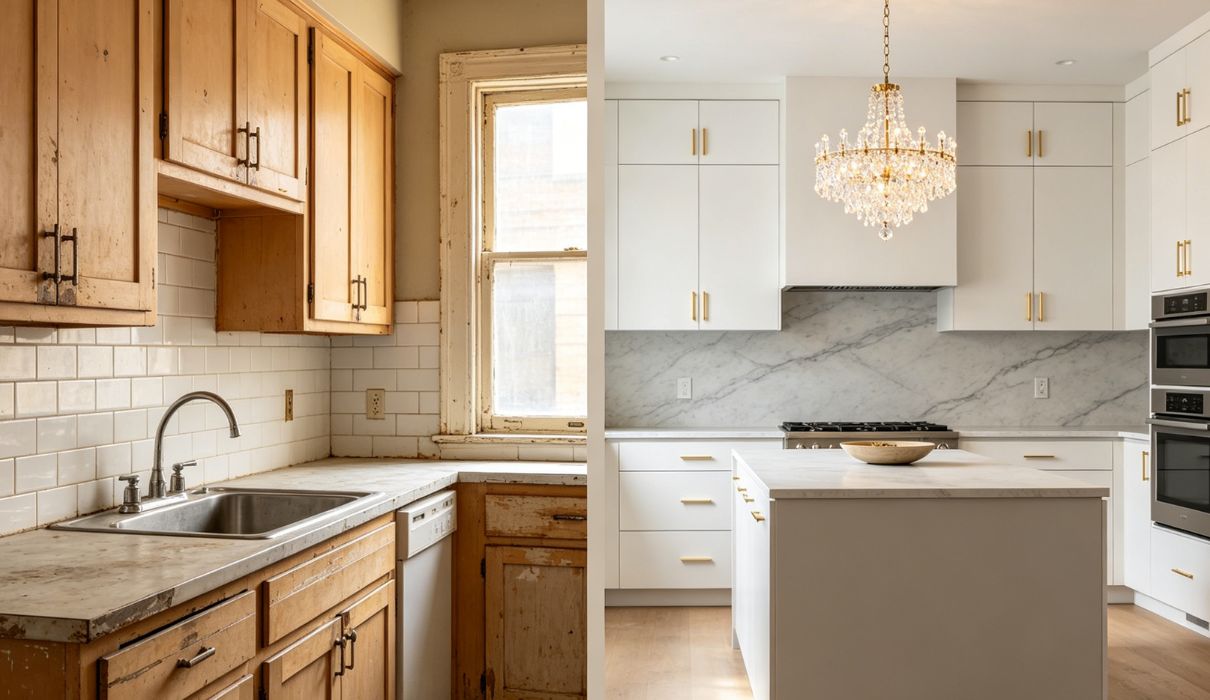
Every home reaches an inflection point where the honest calculation shifts. Below that point, maintaining the existing finishes through patches, touch-ups, and small repairs is cheaper and more sensible than replacing them. Beyond it, the maintenance cycle becomes self-defeating. Each fix reveals or creates the next one, and the cumulative cost of repeated small interventions exceeds what a proper renovation would have cost.
Finishes that have reached this point are not hard to identify. Grout that stays discoloured no matter how thoroughly it is cleaned. Ceiling paint that continues to show water staining after the leak has been fixed. Cabinet doors that have been adjusted multiple times and still do not close properly. Tiles that have hairline cracks running between them that widen slightly every year. Floor laminate that has lifted in multiple places.
None of these individual issues is catastrophic. But they accumulate into a home that looks and feels like it is always slightly unfinished, regardless of how often it is cleaned. Renovation resets this cycle. Rather than spending RM500 here and RM800 there year after year on the same surfaces, a focused renovation resolves the underlying condition and starts the clock again on a surface that is actually in good repair.
The Layout Creates Problems That Cannot Be Fixed with Furniture
Poor layout is one of the strongest reasons to renovate, and one of the most commonly underestimated. Homeowners frequently try to solve layout problems with furniture choices or storage purchases, and spend years wondering why the house still feels awkward.
Layout problems that furniture cannot solve include kitchens where the work triangle, the path between the sink, the cooker, and the refrigerator, forces unnecessary crossing. Bathrooms where the door opening conflicts with the toilet or vanity position. Living rooms where the only practical furniture arrangement blocks natural movement through the space. Bedrooms where no wall gives enough clearance for a bed without blocking either the wardrobe or the door.
The solution to these problems is usually structural: moving a wall, relocating a door, repositioning a plumbing point, or reconfiguring the division between adjacent rooms. These are not minor works, but the improvement they produce is disproportionate to the cost in most cases. A RM15,000 to RM25,000 layout reconfiguration that makes a kitchen genuinely functional to cook in improves the quality of daily life more meaningfully than RM50,000 spent on premium appliances in the same dysfunctional layout.
You Want the Home to Be More Comfortable, Not Just More Impressive
Comfort gets discussed less than style in renovation conversations, probably because it is harder to photograph. But I think it is the more honest motivator for most people, and the one that produces better outcomes when it drives the decision.
A more comfortable home is one where the lighting is appropriate for how each room is actually used, not just positioned to look good in a photograph. Where ventilation is adequate for Malaysian heat and humidity rather than just meeting a minimum standard. Where storage is sufficient for the household’s actual possessions so surfaces remain clear and the home is genuinely easier to keep tidy. Where the master bathroom has enough space to function properly for two adults in the morning without constant negotiation.
Comfort improvements tend to age well. A renovation that makes the home easier to live in and easier to maintain continues to deliver value every day, long after the excitement of having done something new has faded. A renovation that primarily improves appearance often starts losing its appeal once the novelty wears off, particularly if the underlying functional issues were never addressed.

Family Circumstances Have Changed and the Home Has Not Kept Up
Renovation is often an act of adaptation rather than improvement. The house was configured for the family it housed at a particular point in time, and circumstances have shifted in ways the original layout did not anticipate.
A couple who bought a two-bedroom condo in Subang Jaya or Mont Kiara and now have two young children are living in a space that was not designed for that household. The spare room that used to function as a study has become a child’s bedroom, and there is no longer anywhere in the house to work from home. The single bathroom that was entirely adequate for two adults is now used by four people in the morning. The open-plan living and dining area that felt spacious before has no separate space where a child can be supervised while playing without dominating the entire common area.
Other common triggers in Malaysia include elderly parents moving in, which typically requires changes to bathroom accessibility and safety, and children entering secondary school, which creates demand for a dedicated study space that the original layout did not include. Work-from-home arrangements have also become a significant driver, with many Klang Valley households realising their existing home has nowhere that genuinely functions as a quiet, separated workspace.
Renovation in response to these shifts is not optional improvement. It is necessary adaptation. The cost of not doing it is a household that functions poorly for the people living in it, every day.
You Are Preparing the Property for Rental or Resale
Renovation before renting or selling is a different calculation from renovation for personal use, and it is worth approaching differently.
For rental, the priority is durability and tenant appeal rather than personal preference. Practical, hard-wearing finishes in neutral tones, a kitchen that functions well without being premium, bathrooms that are clean and modern without being expensive, and sufficient storage for a full household occupancy are the relevant targets. In the Klang Valley rental market, a well-maintained mid-range renovation in a property that is genuinely functional commands meaningfully better yield than an equivalent property in poor condition. A RM40,000 to RM60,000 renovation on a terrace house in Cheras or Kepong that is tired but structurally sound can increase rental income by RM300 to RM500 per month, a payback period of seven to fourteen years, not accounting for the capital value improvement.
For resale, the calculation is about removing objections rather than creating impressions. Buyers of sub-sale properties in Malaysia are typically realistic about condition. What creates hesitation is not the absence of premium finishes but the presence of obvious maintenance issues: staining, cracked tiles, failing waterproofing, dated fittings that suggest deeper neglect. A renovation that brings the property to a clean, functional condition removes these objections more effectively than one that chases luxury at one end while leaving obvious defects unaddressed at the other.
You Are Tired of the Same Problems Coming Back
There is a specific kind of renovation fatigue that comes from repeated temporary repairs. The leaking bathroom that was resealed twice and still shows water staining on the ceiling below. The kitchen cabinet doors that have been adjusted three times and still refuse to close cleanly. The external wall crack that was patched during the dry season and opened again after the first monsoon.
Each of these incidents feels small on its own. The cost is manageable. The inconvenience is brief. But they accumulate into a persistent background awareness that the house is slowly losing a battle it is never quite winning. That awareness is tiring in a way that is difficult to articulate but real.
Renovation that addresses the root cause properly breaks this cycle. Replacing the failed waterproofing membrane rather than resealing the surface, replacing the cabinet carcasses rather than repeatedly adjusting the same warped doors, addressing the structural movement causing the wall crack rather than filling it again. The cost is higher than another patch. The outcome is a surface that is actually fixed rather than one that is temporarily acceptable.
The Test That Separates Good Reasons from Bad Ones
Ask yourself whether the reason for renovating will still make sense six months after the work is done. Not six months after the decision. Six months after the renovation is finished and the excitement of having done something new has fully settled.
Reasons that tend to pass this test: the kitchen was genuinely difficult to cook in and now it works properly. The bathroom was embarrassingly dated and now it is clean and functional. The home had no space for elderly parents and now it does. The layout created daily friction and now it does not. The house was in poor enough condition that maintenance was becoming a constant preoccupation and now the major issues are resolved.
Reasons that often fail this test: the kitchen was fine but a competitor on a renovation programme looked more impressive. The bathroom was functional but tiles were no longer trending. A neighbour had recently renovated and the comparison was uncomfortable. The style felt dated, although nothing was actually inconvenient.
I am not suggesting style and appearance are unimportant. They are part of how comfortable a home feels and how much pleasure it gives. But style-led renovation that does not address underlying function or condition tends to produce a cycle of renovation rather than a resolution of it. The house looks new for a year or two and then begins to need updating again, because the things that actually wear out were never properly addressed.
The renovations that hold up, the ones where homeowners still feel genuinely pleased with the decision three years later, are almost always the ones that solved something real.

Final Thoughts
Renovation is worth doing when it makes the home genuinely better to live in, not just more impressive to look at. The best reasons tend to be functional: a layout that was not working, a condition that had gone beyond patching, a household that had outgrown its current configuration, or a property that needed serious attention before it could be rented or sold with confidence.
If the reason for renovating relates to something that creates daily friction, daily inconvenience, or a genuine mismatch between the home and the people living in it, that is a reason likely to still feel valid long after the work is done. If the reason is primarily about chasing a current trend or responding to social comparison, it is worth sitting with that question for a while before committing a significant budget to it.
Frequently Asked Questions
What is the most practical reason to renovate a home in Malaysia?
When the home creates genuine daily inconvenience: a kitchen layout that does not work, inadequate storage, poor ventilation, or bathrooms that are failing structurally. Renovation in these cases addresses a real problem rather than an aesthetic preference. These functional improvements produce lasting value because they improve the quality of daily life every day, not just when the home is being viewed by visitors.
Is it worth renovating a house before renting it out in Malaysia?
Often yes, particularly for older properties in need of condition restoration rather than cosmetic upgrading. In the Klang Valley rental market, a clean and functional mid-range renovation on a tired terrace house typically commands significantly better rental yield than the unrenovated property. A RM40,000 to RM60,000 renovation that resolves condition issues and brings the property to a functional standard can increase monthly rental by RM300 to RM500, with a payback period of seven to fourteen years before accounting for capital value improvement.
How do I know when a house needs renovation rather than maintenance?
When the same surfaces or fittings require repeated repairs and the fixes are not lasting, the house has crossed into renovation territory. A bathroom that has been resealed twice and still shows water ingress, cabinet doors that have been adjusted multiple times and still do not function properly, or external cracks that reopen every monsoon season are all signs that the underlying condition requires proper remediation rather than surface treatment.
Should I renovate for resale value or personal use?
Renovating for resale requires a different approach from renovating for personal use. For resale, the priority is removing condition-related objections rather than creating impressive features. Buyers of sub-sale properties are typically practical. They respond less to premium finishes and more to the absence of obvious maintenance problems. A focused renovation that brings the property to a clean, functional baseline is usually more effective for resale than one that invests heavily in premium upgrades while leaving condition issues unaddressed.
Does renovation always improve property value in Malaysia?
Not automatically. Renovation that addresses genuine condition issues and brings the property to a functional standard reliably supports value. Renovation that adds premium features beyond what the location and property type typically command in the market may not recover the full investment at the point of sale. The strongest value-supporting renovations are those that remove objections: poor condition, dated bathrooms, failing waterproofing, dysfunctional kitchens. Not the ones that those that pursue luxury in a market segment where buyers are not paying a premium for it.